Build Profitability, Not Battery Waste
December 15, 2025
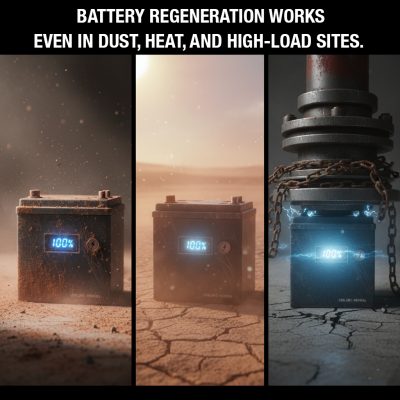
India’s construction boom is relentless, with the sector projected to reach $1.4 trillion by 2025, fueled by infrastructure projects like highways, metro rails, and smart cities. Yet, this growth hinges on heavy machinery—loaders, excavators, concrete pumps, cranes, and compactors—that devour batteries at an alarming rate. Harsh site conditions, including scorching heat (often exceeding 45°C in summer), pervasive dust, monsoonal humidity, and relentless overwork, accelerate battery degradation. A typical lead-acid battery in a JCB backhoe loader lasts just 12-18 months under these stresses, compared to 3-5 years in milder environments.
Most batteries end up discarded prematurely. India generates over 2 million tons of lead-acid battery waste annually, much from construction, with only 60-70% formally recycled per Central Pollution Control Board data. The rest litters landfills, leaching toxins like lead and sulfuric acid into soil and groundwater. This not only inflates operational costs—replacements run ₹20,000-₹50,000 per unit—but also undermines sustainability goals amid India’s push for green building norms like GRIHA and IGBC certifications.
Enter Battery Regeneration: A Game-Changer
Battery regeneration flips this script by reversing sulfation (hardened lead sulfate crystals on plates) and chemical wear through controlled desulfation pulses, electrolyte purification, and capacity testing. Unlike recycling, which destroys batteries, regeneration restores them to 70-85% of original capacity, often certified via conductance tests meeting BIS/IS 14257 standards.
The process unfolds in three phases:
- Diagnosis: Advanced testers measure internal resistance, voltage sag, and state-of-health (SoH) using tools like Midtronics or conductance meters.
- Desulfation: High-frequency pulses (1-10 kHz) shatter sulfate crystals without overheating, followed by deep cycling to reform active material.
- Reconditioning: Electrolyte balancing, plate cleaning, and capacity verification ensure the battery handles real-world loads.
Results are compelling. Studies from the Indian Institute of Technology (IIT) Delhi show regenerated batteries deliver 75%+ capacity retention after 500+ cycles, versus 40% for aged units. For construction firms, this translates to slashing replacement costs by 25-40%—a boon when fleets number 50-200 machines.
Real-World Impact: Boosting Uptime and Profits
Infrastructure leaders like Larsen & Toubro (L&T) and Shapoorji Pallonji report 200+ extra machine-hours per year per site from regenerated batteries. Downtime plummets as batteries resist heat-induced voltage drops and dust-clogged terminals. Consider a Delhi-based contractor, ABC Infra: In 2024, they regenerated 150 batteries across 40 machines. Savings hit ₹11 lakh in year one, with downtime cut by 21% (from 15% to 11.8% utilization loss). Fuel efficiency improved 8% indirectly, as reliable starts reduced idling.
Tender bids favor such metrics. Public Works Department (PWD) audits now score uptime above 85%, and regenerated fleets ace them, securing 15-20% more contracts. In a competitive landscape where margins hover at 5-8%, this edge is gold.
|
Metric
|
Before Regeneration
|
After Regeneration
|
Improvement
|
|---|---|---|---|
|
Battery Lifespan
|
12-18 months
|
30-48 months
|
+150%
|
|
Annual Replacement Cost (per 50-unit fleet)
|
₹25 lakh
|
₹18.75 lakh
|
-25%
|
|
Machine Uptime
|
82%
|
90%
|
+8-10%
|
|
Downtime Reduction
|
Baseline
|
21%
|
+200 hours/year/site
|
Sustainability and Regulatory Tailwinds
As green certifications standardize—LEED v4 mandates 50% lifecycle extension for equipment—battery management differentiates winners. India’s Battery Waste Management Rules 2022 enforce 90% collection by 2025, with EPR (Extended Producer Responsibility) fines up to ₹10 lakh for non-compliance. Regeneration aligns perfectly, diverting 70-80% from landfills.
Carbon footprint shrinks too: One regenerated battery saves 500kg CO2e versus new production (per TERI estimates), aiding net-zero pledges. Top firms like Tata Projects tout this in annual reports, attracting ESG investors.
Government incentives amplify: 20% subsidy under Atmanirbhar Bharat for recycling tech, plus MSME loans for regeneration setups (₹50 lakh at 7% interest).
Challenges and Solutions
Adoption hurdles exist:
- Skepticism: “Will it last?” Solution: 6-12 month warranties from certified providers like Amaron or Okaya.
- Logistics: Remote sites. Solution: Mobile regen units (van-based, ₹5 lakh investment, serves 50 batteries/day).
- Skilled Labor: Solution: 2-day training via MoRTH programs.
Overcoming these, 30% of top-100 contractors now regenerate, per CRISIL 2025 report.
Future Outlook: Scaling Profitability
By 2030, India’s 15% CAGR in construction demands 50% more equipment, amplifying battery needs. Regeneration hubs could cluster in Surat, Chennai, and Gurugram, mirroring China’s 40% market penetration. Pair with solar trickle chargers for 95% uptime.
Leaders aren’t just building roads—they’re engineering resilient operations.